







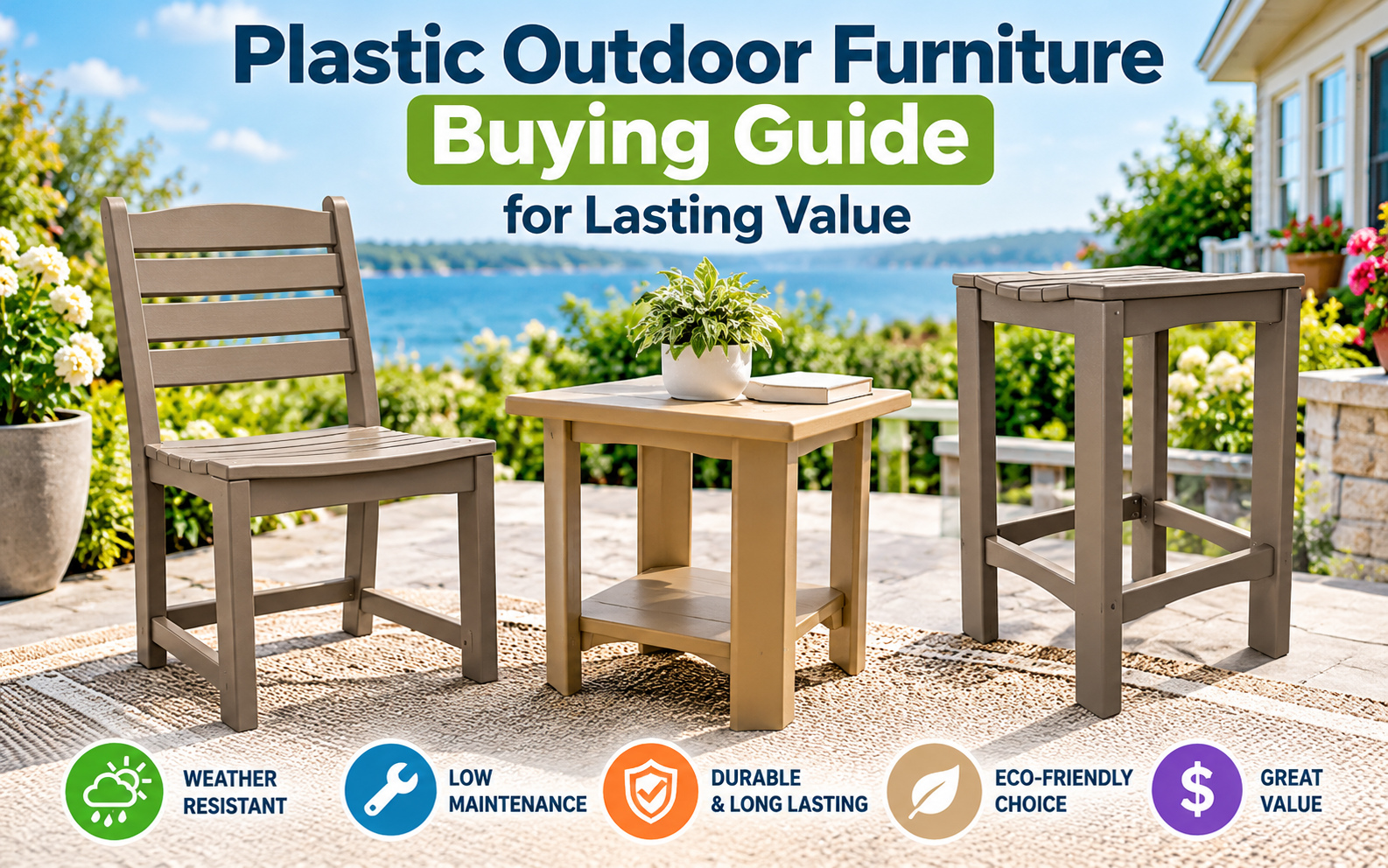
Plastic outdoor furniture can handle sun, rain and salt air when built right. Learn what to check, how to compare materials, and how to care for it year round.
TL;DR Plastic outdoor furniture is a practical choice for patios, decks, pool areas and coastal yards because it resists rot, rust and moisture and needs little more than soap and water. Quality varies widely, though. Thin, unstabilized plastic can fade, chalk and crack within a few seasons, while furniture made from a UV stabilized polymer with stainless steel hardware holds its shape and color far longer. Before you buy, check four things: the polymer type, the hardware, the warranty terms (structural and fade coverage are often separate), and the assembly and shipping details. Then compare plastic against aluminum, teak and resin wicker based on your climate, your budget and how much upkeep you will realistically do. Set it up on level ground, rinse it regularly and skip harsh abrasives. Chosen well, plastic outdoor furniture gives you a low maintenance set that stays presentable for many seasons and keeps weekends free.
Few things spoil a brand new patio faster than chairs that fade to chalk or crack after one hot summer. Plenty of buyers have been through it, and the experience leaves many of them wary of plastic outdoor furniture altogether. The problem is rarely the material itself. It is the gap between thin, cheaply molded pieces and well engineered polymer furniture. This guide explains how the material works, how to judge quality, and how to match a set to your climate, so you can buy plastic outdoor furniture that stays sturdy, comfortable and good looking for years.
Quick Answer The best plastic outdoor furniture uses UV stabilized polymer, stainless steel hardware and clear warranty coverage for both structural defects and fading. It resists rot, rust and mildew, cleans with soap and water, and suits wet, sunny and coastal settings. Cheap, thin plastic is the weak point, so judge construction and warranty terms before price or color.
What is plastic outdoor furniture?
Plastic outdoor furniture is seating, tables and accessories molded or fabricated from synthetic polymers such as high density polyethylene (HDPE), polypropylene or PVC, designed to resist moisture, rot and sunlight outdoors. Unlike wood or steel, polymer does not absorb water or rust, so a well made set needs cleaning rather than sealing or painting. Quality depends on three things: the resin, the UV stabilizers blended into it, and the hardware that holds the pieces together.
Why Plastic Outdoor Furniture Keeps Gaining Ground
Homeowners spent decades choosing wood and metal for the patio, then spent weekends sanding, sealing and repainting. Plastic outdoor furniture changed that routine. It asks for less time and less skill, and it tolerates conditions that punish other materials.
The Low Maintenance Advantage
With plastic outdoor furniture, the upkeep list gets short. Wood needs sealing, steel needs paint, and untreated metal fasteners rust. Polymer does none of those things. It does not soak up water, so it does not swell, rot or splinter. A hose, mild dish soap and a soft brush handle most cleaning jobs. For anyone who would rather spend Saturday on the patio than fix it, that difference is the main selling point.
Where It Performs Best
Plastic outdoor furniture suits places where moisture is constant. Pool decks, covered porches, lake houses, rental properties and restaurant patios all see spills, humidity and heavy use. Coastal yards are another strong fit, because salt air corrodes steel quickly but does not attack polymer. In each case, the pieces that last are the ones built from stabilized resin with corrosion resistant hardware.
Key point: Plastic wins on upkeep and moisture resistance, but only when the resin is UV stabilized and the fasteners are stainless steel.
Types of Plastic Used in Outdoor Furniture
Not all plastic outdoor furniture behaves the same outdoors. The resin, the additives and the way the piece is made decide how it ages. This table compares the materials you will meet most often.
| Material | Common uses | Strengths | Weak spots |
|---|---|---|---|
| HDPE | Adirondack chairs, poly lumber slats | Strong, moisture proof, takes UV additives | Heavier, thin sections can warp |
| Polypropylene (PP) | Stacking chairs, molded seats | Light, easy to move, budget friendly | Breaks down faster in sunlight unless stabilized |
| PVC | Rigid frames, some loungers | Stiff, water resistant | Can yellow, can turn brittle in deep cold |
| Marine grade polymer | Furniture built for heavy sun and coasts | Designed for harsh exposure | Terms vary by maker, so read the warranty |
| Wood plastic composite | Slatted benches and tables | Wood look, stable shape | May fade and hold some surface moisture |
What UV Stabilizers Actually Do
Sunlight breaks the chemical bonds in plastic over time. The result is fading, a powdery surface called chalking, and eventually brittleness. Makers slow that process with additives. Carbon black and certain pigments absorb or scatter ultraviolet light, and hindered amine light stabilizers (HALS) interrupt the chain reactions that cause damage. Ask whether a maker tests its resin against recognized methods, such as the UV weathering practices published by ASTM International. A company that can point to testing is usually more reliable than one that only says “UV resistant.”
Why “Marine Grade” Needs Context
Terms like marine grade describe an intended use rather than one universal rating. They tell you the maker designed the furniture for harsh sun, rain and salt air. The warranty and the hardware then show how seriously the maker stands behind that claim.
How Sun, Rain and Salt Air Affect Plastic
Understanding the three main stressors helps you buy and place plastic outdoor furniture wisely.
UV Exposure and Fading
Sunlight is the biggest threat. Darker colors absorb more energy, so they tend to show fading sooner, and unstabilized plastic can fade unevenly where the sun hits hardest. A stabilized resin slows this, but no outdoor material is immune. A fade warranty is useful evidence that the maker expects its color to hold.
Heat and Surface Temperature
Plastic expands when heated and contracts when it cools. Over many seasons, that movement works on every joint. Loose or undersized fasteners can crack the plastic around them. Dark surfaces can also get hot to the touch in direct summer sun, so a light colored set or a shaded spot is more comfortable.
Moisture, Mildew and Salt
Polymer does not rot, but a film of dust and pollen can grow mildew on its surface. That grime wipes off easily. Salt is a different story. It speeds up corrosion in metal parts, which is why the screws and bolts matter so much on a coastal patio.
Key point: Sun fades plastic, heat stresses its joints, and salt attacks its fasteners. Good resin plus stainless hardware answers all three.
What Separates Durable Pieces From Disposable Ones
Two sets can look identical in a photo and age very differently. These four checks tell them apart.
Polymer Formulation
Look for specific language about the resin and its UV protection. Vague claims such as “weatherproof” tell you little. Heavier sections and thoughtful ribbing add stiffness, while thin, hollow looking panels flex and fatigue under repeated load.
Hardware Quality
Hardware is where many budget sets fail. Zinc plated steel screws rust, stain the plastic with orange streaks and loosen over time. Stainless steel resists corrosion because of the protective chromium oxide layer on its surface. Thicker fasteners also resist bending and shearing when people sit down, lean back and shift around. Using one metal type throughout helps avoid galvanic corrosion, which happens when dissimilar metals touch in damp conditions.
Warranty Structure
Read what a warranty covers, not just how long it lasts. Structural coverage protects against cracking, breaking and failed joints. Fade coverage protects the color. These are different risks, and the best terms address both separately.
Origin, Shipping and Assembly
Where a piece is made, how it ships and how it goes together all affect your experience. As a concrete example, the Marine Grade Polymer pieces made in the USA on the shop page linked in the introduction use 3/16″ stainless steel hardware and carry a 7-year warranty on structural defects plus a 5-year warranty against fading. They ship knock-down in a box, assemble in about 20 minutes with the included hardware, and ship free to the 48 contiguous states and Washington, D.C. That mix of corrosion resistant fasteners, split warranty coverage and simple assembly is the standard worth holding any seller to.
Key point: Judge a set by its resin, hardware and warranty terms. A photo cannot show any of the three.
Plastic vs Aluminum, Teak and Resin Wicker
Plastic outdoor furniture is one of several sensible choices. The right one depends on your site and habits.
| Factor | Plastic (polymer) | Aluminum | Teak | Resin wicker |
|---|---|---|---|---|
| Upkeep | Rinse and wipe | Rinse, watch the coating | Oil it or accept a gray patina | Clean the weave, inspect the frame |
| Rust risk | None in the polymer, check hardware | None in the metal, check fasteners | None | Depends on the frame |
| Rot risk | None | None | Low, but not zero if neglected | Depends on the frame |
| Weight | Light to medium | Light | Heavy | Light |
| Coastal suitability | Strong with stainless hardware | Good with a quality coating | Good, weathers to gray | Good with an aluminum frame |
| Upfront cost | Low to mid | Mid | High | Mid |
When Aluminum Makes More Sense
Aluminum is slim and light, and it suits modern designs with thin profiles. If you want a sleek dining set and are happy to check the powder coating for chips, it is an excellent option.
When Teak Makes More Sense
Teak has a warm, natural look and holds up well when cared for. It costs more and rewards owners who like maintenance, or who enjoy the silver gray patina it develops.
When Plastic Makes More Sense
Choose plastic outdoor furniture when you want the lowest maintenance routine, you live near salt water or in a damp climate, or you rent out a property and need furniture that tolerates rough use. Bold, saturated colors are also easier to find in molded polymer than in natural materials.
Pros and Cons of Plastic Outdoor Furniture
| Pros | Cons |
|---|---|
| Does not rot, rust, splinter or need refinishing | Cheap versions fade, chalk and crack |
| Cleans with soap, water and a soft brush | Lighter pieces can blow around in strong wind |
| Handles rain, humidity and spills well | Dark colors can get hot in direct sun |
| Wide range of colors and styles | Some people find the look less natural than wood |
| Light enough to rearrange or store | Deep scratches are hard to repair |
How to Choose by Climate and Space
Hot, Sunny Regions
In strong sun, prioritize UV stabilization in any plastic outdoor furniture and a fade warranty. Lighter colors stay cooler to sit on. Place the set under a pergola or umbrella when you can, because shade extends the life of any outdoor material.
Coastal and Lakeside Yards
Salt spray and humidity are tough on metal, so plastic outdoor furniture with the right fasteners shines here. Insist on stainless steel hardware and rinse the furniture with fresh water now and then to wash off salt. Pieces with a coastal rated polymer are a sensible fit here.
Cold Winter Regions
Polymer can become more brittle in deep cold. Cover or store furniture during the harshest weeks, and avoid dragging frozen pieces across hard ground.
Small Patios and Balconies
Measure before you buy plastic outdoor furniture for a tight space. Compact chat sets and light chairs let you move things around, but lighter furniture needs a plan for gusty days, such as placing it against a wall or bringing it inside during storms. The National Weather Service posts wind advisories worth checking on high floor balconies.
Key point: Match the set to your biggest local stress: sun, salt, cold or wind. One feature rarely solves all four.
Step by Step: Setting Up and Caring for Your Set
- Unbox and sort the hardware. Lay the parts out and confirm that everything listed is there before you start.
- Assemble on a soft surface. A blanket or the cardboard box keeps the finish from scratching.
- Use every included fastener. Tighten until firm, then stop. Overtightening can stress the plastic around the hole.
- Set it on level ground. Uneven pavers twist frames over time. Felt or rubber pads protect the feet.
- Rinse it monthly in season. Mild dish soap, warm water and a soft brush remove pollen, dust and early mildew.
- Check the hardware each season. Retighten anything loose and look for rust on any non stainless parts.
- Protect it in winter. Use breathable covers or store it indoors.
Cleaning Do’s and Don’ts
- Do use mild soap, a soft brush and a hose.
- Do rinse well, because soap residue attracts dirt.
- Don’t use steel wool or scouring pads, which scratch and dull the surface.
- Don’t use strong solvents unless the maker approves them.
- Don’t power wash at close range, which can mar the finish.
Three Typical Scenarios
A coastal condo owner with a small balcony needs light chairs that tolerate salt mist. Stainless hardware and a quick fresh water rinse keep the set clean. A family with a sunny backyard and kids needs forgiving furniture, so a stabilized polymer set in a light color handles spills and heat. A short term rental host wants furniture that survives guest turnover, which points toward sturdy chairs with simple assembly and replaceable parts.
What Owners and Professionals Say About Plastic Outdoor Furniture
Discussions on Reddit and Quora return to the same themes again and again. The summary below reflects the general consensus in my own words, not any single post.
What most people misunderstand
Many buyers assume that all plastic outdoor furniture is flimsy and disposable, and that plastic outdoor furniture cannot handle real weather. That belief comes from the cheapest molded chairs, which are indeed designed for short term use. Well engineered polymer furniture is a different category. Another common misunderstanding is that “UV resistant” means “never fades.” Every outdoor material changes in sunlight. The real question is how slowly.
Common mistakes
Owners of plastic outdoor furniture often buy on photos and price alone, ignoring hardware and warranty terms. They skip cleaning until mildew sets in, scrub with abrasive pads that dull the finish, and leave lightweight chairs unprotected in storms. Others mix dissimilar metal fasteners or overtighten bolts until the plastic cracks around the hole.
What experienced users and professionals recommend
Experienced owners and property managers recommend a few habits for plastic outdoor furniture: checking stainless hardware first, reading the warranty carefully, and choosing lighter colors in hot climates. They rinse furniture regularly, cover it during harsh winters, and buy a little more seating than they think they need, because durable sets get used more. Many also advise buying from a seller that explains its materials plainly.
Is plastic outdoor furniture good quality? It can be. Quality depends on the resin, the UV stabilizers and the hardware, not on the word plastic. Well made polymer furniture resists rot, rust and moisture and holds up through many seasons, while thin budget pieces tend to fade and crack.
Does plastic outdoor furniture fade in the sun? Any plastic can fade eventually, but UV stabilized resin slows it a great deal. Dark colors usually show fading first. A separate fade warranty gives you written proof that the maker expects its color to last.
How long does plastic outdoor furniture last? Lifespan depends on resin quality, sun exposure, climate and care. A warranty is a reasonable guide, since makers price in the failures they expect. Shade, regular cleaning and hardware checks all add useful time.
What is the best material for outdoor furniture? No single material wins everywhere. Plastic suits wet and coastal settings and low upkeep. Aluminum suits slim modern designs. Teak suits owners who enjoy maintenance and a natural look.
Can plastic outdoor furniture stay outside in winter? Usually yes, but extra care helps. Quality polymer tolerates rain and snow. Deep cold can make plastic more brittle, so cover or store it and handle it gently when it is frozen.
Frequently Asked Questions
How do I clean plastic outdoor furniture?
Start by hosing off loose dust and pollen. Mix a few drops of mild dish soap into warm water, scrub with a soft brush or sponge, and rinse thoroughly so no residue is left behind. For mildew, let the soapy water sit for a few minutes before scrubbing. Avoid steel wool, abrasive pads and strong solvents, which can dull or scratch the surface. Check the maker’s care guidance before using bleach. Plastic outdoor furniture needs cleaning only once a month during the outdoor season, which is usually enough, with a deeper wash in spring. Dry the furniture before covering it so moisture does not get trapped against the surface. If a stain survives soap, try a second round with a longer soak rather than reaching for a harsher cleaner.
Is plastic outdoor furniture better than aluminum?
Neither is better in every case. Plastic wins on low maintenance, moisture resistance and the range of colors available, which makes it a strong pick for pool decks, rainy regions and coastal yards. Aluminum wins on slim profiles and modern styling, and it stays light and rust free, but its coating can chip and may need touch ups. Weight matters too. Both are easy to rearrange, though lighter chairs of either type can shift in wind. Compare the warranty and hardware on any set you consider, because those details usually predict satisfaction better than the material label alone. If both materials fit your budget, let your climate, your style and your tolerance for upkeep break the tie.
Can plastic outdoor furniture be used near the ocean?
Yes, and it is one of the better choices for salt air because polymer does not rust. The weak point is the hardware. Corroding screws and bolts are the usual failure on coastal patios, so look for stainless steel fasteners and avoid zinc plated parts. Rinse the furniture with fresh water every so often to wash off salt residue, and wipe away sand, which can scratch the surface. Choose a UV stabilized resin, since coastal sun is intense and reflects off water. A clear warranty for both structure and fading is a sensible extra layer of protection. Finally, give pieces some airflow so damp sand and salt do not sit trapped against the surface for days.
What should I look for in a plastic outdoor furniture warranty?
Look for separate coverage for structural defects and for fading, because they are different risks. Check how long each lasts, what counts as a defect, and whether you need proof of purchase or photos to make a claim. Ask whether the warranty covers hardware, since failed fasteners are a common problem. Notice any exclusions for commercial use, chemical damage or improper assembly. A warranty written in plain language usually signals a maker that expects to honor it. Keep your receipt and take a quick photo of the finished set after assembly. If you plan to use the furniture at a rental or business, confirm that residential use limits do not apply to you.
Is plastic outdoor furniture hard to assemble?
Usually not. Many sets ship knock-down in a box so the parts are easy to carry and store until you are ready. Assembly mostly means attaching legs, backs and arms with the supplied bolts, and a well designed set can go together in about 20 minutes with basic tools and included hardware. Work on a soft surface, follow the order in the instructions and avoid overtightening. Having a second person to hold larger parts makes the job smoother. Check that the hardware count matches the parts list before you begin. Keep the leftover packaging until you are sure everything fits, in case a part needs to be exchanged.
Plastic outdoor furniture rewards buyers who look past the label. The material is not the risk. Weak resin, rusting hardware and vague warranties are. Pick a UV stabilized polymer, confirm stainless steel fasteners, and read what the warranty covers for structure and for fading. Match the set to your climate, give it a monthly rinse, and it will repay you with years of easy outdoor living, whether your patio faces the sun, the rain or the sea. Compare two or three options side by side, then buy with confidence. A little attention now saves replacement costs and frustration later.
Key Takeaways
- Plastic outdoor furniture resists rot, rust and moisture and cleans with mild soap and water.
- Quality depends on the resin, the UV stabilizers and the hardware, not on the word plastic.
- Stainless steel hardware matters most in coastal and damp settings.
- Look for separate warranty coverage for structural defects and for fading.
- Dark colors fade sooner and run hotter, so lighter colors suit sunny regions.
- Compare plastic with aluminum, teak and resin wicker based on climate, budget and upkeep tolerance.
- Rinse monthly, avoid abrasives and cover or store pieces during harsh winters.
- Knock-down shipping and simple assembly make a well designed set easy to set up in about 20 minutes.