








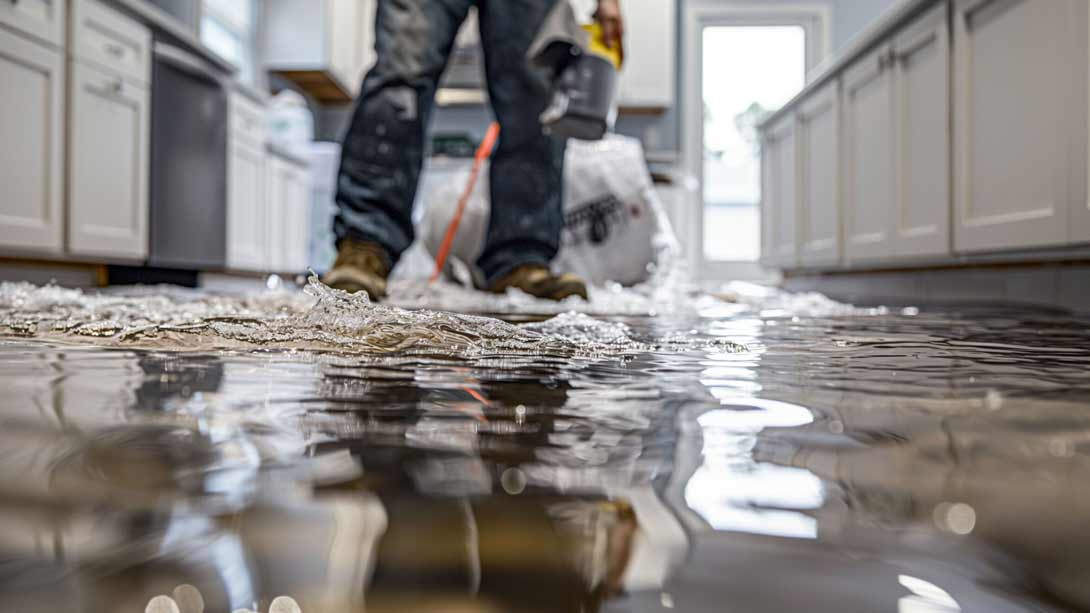
Somewhere in Gilbert right now, a water heater in a garage is rusting from the inside out. The homeowner has no idea. It’s been doing its job quietly for twelve or thirteen years, which is about three years past the point where Arizona’s hard water starts eating through the tank lining. One morning it’s going to let go, dump 50 gallons across the garage floor, and send water under the interior wall into the bedroom carpet.
And that homeowner is going to grab some towels and a box fan and think they’ve got it handled.
They don’t.
Most people in the East Valley have never dealt with a real property damage event. When it happens, the gut reaction is to minimize. Mop it up. Spray some bleach. Call a carpet cleaner. Anything to avoid the uncomfortable truth that what just happened falls into a category called property restoration, which is a whole industry most people never hear about until they’re googling it at 1 AM in a panic.
The gap between what homeowners think restoration involves and what it actually involves is where the expensive mistakes live. Here’s what’s really going on behind the scenes when water, fire, mold, or something worse hits a Gilbert home.
Water Gets Into Places You’d Never Think to Check
Water damage is the most common insurance claim in the country, and Gilbert’s got a few factors working against it. The housing boom from the mid-90s through 2008 put up thousands of homes with copper supply lines under concrete slab foundations. That copper is corroding. Arizona’s mineral-heavy water accelerates the process. Add monsoon season dumping sideways rain through compromised roof seals, aging water heater tanks, and washing machine hoses that have been baking in 150-degree garages for a decade, and the math isn’t great.
But the damage itself is what trips people up. Because what you see on the surface is maybe a third of what’s actually happening.
Take a supply line break behind a bathroom vanity. Water sprays inside the cabinet, runs out across the tile floor, and seeps through the grout line into the hallway carpet. That’s the part you notice. The part you don’t notice is water running down inside the wall cavity, pooling on the concrete slab at the bottom plate, and wicking back up into the drywall through capillary action. Same physics as dipping a paper towel in a glass of water and watching it climb. Drywall does the same thing. Twelve, sometimes eighteen inches above the visible waterline.
Carpet pad is the other silent problem. That yellow foam underneath the carpet absorbs water like crazy but the carpet on top can feel barely damp. A homeowner walks across it, thinks it’s fine, and goes to bed. Meanwhile the pad is saturated and sitting on concrete in a 77-degree house. Perfect conditions for microbial growth within 48 hours.
Professional water restoration follows a specific sequence for a reason. Truck-mounted extractors pull water out of pad and subfloor that shop vacs and rental carpet cleaners physically cannot reach. Commercial air movers and dehumidifiers create controlled drying conditions inside the structure. Technicians come back daily with moisture meters to track progress on drywall, framing, and subfloor until everything hits dry standard. Wood framing has to drop below 15 to 16 percent moisture content. Drywall essentially has to read zero on a relative scale.
Skip that process, or delay it by even a couple days, and a $2,000 dry-out turns into a $9,000 mold remediation. Happens constantly.
Fifteen Seconds of Fire, Three Weeks of Smoke
Most house fires in Gilbert aren’t the dramatic kind. Kitchen grease fires. Electrical shorts in a wall outlet. A dryer vent clogged with lint that finally ignites. The fire itself gets knocked down fast, sometimes with a household extinguisher, sometimes by Gilbert Fire. The burn area is small. A few square feet of scorched wall, a melted microwave, some blistered cabinet faces.
Homeowners look at that limited burn damage and figure it’s a cleanup job. Scrub the soot, replace the appliance, repaint. Move on.
Then two weeks later the whole house smells like a campfire and nobody can figure out where it’s coming from.
Smoke particles are microscopic. During even a short fire, the HVAC system pulls those particles into the return air, cycles them through the ductwork, and deposits them on every surface in every room. Walls, ceilings, inside closets, on clothing, in bedding, on the blades of the ceiling fan in the guest bedroom that’s forty feet from the kitchen. You can’t see the film on most surfaces. Wipe a white cloth across a wall that looks clean and it comes back gray.
And smoke odor doesn’t just sit on top of surfaces. It bonds. Chemically. Into porous materials like drywall, fabric, wood grain, and carpet fibers. That bond gets stronger every day. A restoration crew cleaning smoke damage at day three is dealing with a manageable job. That same crew at day twenty-one is doing a full-house remediation because the soot has had three weeks to set into everything.
The process for smoke restoration involves solvent-based cleaning of every hard surface, content cleaning or ozone treatment for soft goods and personal items, HVAC duct cleaning, and odor elimination using thermal foggers or hydroxyl generators. Hydroxyl generators use UV light to produce reactive molecules that break down odor compounds over time. Unlike ozone machines, they’re safe to run in occupied spaces.
A moderate kitchen fire cleaned up within the first week might run $3,000 to $5,000. That same fire addressed three weeks later can easily hit $12,000 to $15,000 because the scope went from one room to every room. The fire department puts out the fire. But nobody puts out the smoke. It just keeps spreading until someone stops it.
Mold Growing Inside Walls Nobody Thought to Open
The Arizona mold conversation is always the same. Someone mentions mold and someone else says “we live in the desert, we don’t get mold.” Which would be true if people lived outside.
Inside a Gilbert home, the conditions have nothing to do with the 15 percent outdoor humidity. AC systems generate condensation. Shower exhaust fans vent steam into attic cavities. Slab leaks feed moisture into wall bases for months before anyone notices. A slow drip from a water heater sits against an interior wall and wicks through the drywall for a year while the homeowner never looks behind the recycling bins in the garage.
Every one of those scenarios creates a dark, warm, moist pocket inside the building envelope. Mold germinates on organic material, and drywall paper, wood framing, carpet pad backing, and accumulated dust all qualify. Indoor temperatures in the mid-70s with any consistent moisture source gets colonization started within days, not weeks.
The tricky part is discovery. In humid climates, mold announces itself with musty smells and visible staining. In Arizona, the constant AC circulation masks odors and the growth happens inside enclosed cavities where nobody looks. It gets found during renovations, during home inspections for a sale, or when a water damage event forces walls to be opened up and somebody finally sees what’s been growing back there.
Mold remediation is its own protocol, distinct from water restoration or general cleaning. Containment goes up first. Poly sheeting floor to ceiling, sealed edges, negative air pressure so spores migrate into the containment area, not out of it. HEPA air scrubbers run the entire time. Affected drywall, insulation, and any colonized material gets cut out and bagged inside the containment. Structural framing gets treated with professional-grade antimicrobials, not household bleach, and HEPA vacuumed.
After remediation, a third-party environmental company does clearance testing. Air samples from inside and outside the containment get compared. If spore counts are at or below normal background levels, clearance passes and rebuild can start. If not, the remediation crew goes back in. That third-party verification step is what separates real mold remediation from a guy with a spray bottle telling you it’s handled.
Gilbert’s Housing Stock Is Getting Old Enough for This to Matter
The construction boom that built most of Gilbert’s residential neighborhoods happened between about 1995 and 2010. Those homes are now 16 to 30 years old. That’s the age band where plumbing supply lines corrode, water heater tanks fail, HVAC components degrade, and original roof underlayment starts giving up.
None of that means a house is falling apart. It means the probability of a water, fire, or mold event goes up every year. And when it happens, response time and quality of response determine whether the bill is $2,000 or $20,000.
The difference between a restoration company and a general contractor or cleaning service isn’t just equipment. It’s knowing what’s behind the wall before opening it. It’s understanding that a fire loss also means water damage from suppression hoses. It’s recognizing that a slab leak found today means mold that started growing six weeks ago. These problems layer on top of each other and a company that only handles one piece leaves gaps where damage gets missed and costs compound.
Flow State Restoration covers all of it out of Gilbert. Water, fire, mold, biohazard. IICRC certified, licensed general contractor and over 15 years in the East Valley. They respond within 60 minutes for emergencies and handle insurance coordination directly, which removes a layer of stress from homeowners who are already dealing with enough.
Worth saving the number before the situation picks the timeline for you.