







Modern homes increasingly need to balance several purposes. A dining area might host family meals during the week, provide extra space for entertaining friends at the weekend and serve as a gathering place for birthdays, celebrations and special occasions. When space is limited, choosing furniture that supports more than one activity can make a home feel more flexible without sacrificing style.
A dining pool table is one option for households that enjoy entertaining and want to combine a practical dining surface with recreational use. Rather than dedicating an entire room to a conventional pool table, a dining-style design allows the same area to serve different purposes. Depending on the design, a suitable model can become a dining table for everyday use and a place to play pool when the occasion calls for it.
However, buying one involves more than selecting an attractive finish. Room dimensions, cue clearance, seating arrangements, playing comfort, construction, delivery access and maintenance all influence whether a table will work well in the long term.
This comprehensive guide explains what to consider before purchasing a dining pool table, how to plan the available space and how to compare different designs so that the final choice suits both the home and the people who will use it.
1. What Is a Dining Pool Table?
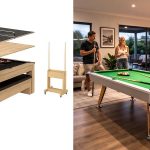
A dining pool table combines the appearance or function of a dining table with the ability to play pool. The exact arrangement varies between models. Some designs use a removable dining top that covers the playing surface, while others incorporate a dining surface that can be configured for different uses. The construction, conversion method and available features depend on the particular product.
The central idea is versatility. A conventional pool table usually needs a dedicated playing area, while a dining pool table is intended to make the space useful for more than one activity. This can appeal to families, couples, entertainers and homeowners who want recreational furniture without committing an entire room to it.
It is important to understand that not every design operates in the same way. Before purchasing, check how the dining surface is fitted and removed, whether it consists of one or more pieces, where it can be stored and how the table is intended to be used for dining and playing.
These details help establish whether a particular design fits the household’s routine. A table that is easy to convert may be more convenient for frequent use, while a heavier or more involved conversion system may be better suited to households that change the setup less often.
2. Start With the Room, Not the Table
One of the most common mistakes when choosing a dining pool table is measuring the furniture footprint without considering the surrounding playing area. A table might fit neatly into a dining room yet leave insufficient space for players to take comfortable shots.
Pool requires room around the playing surface. Players need to stand beside the table, move their bodies into position and extend a cue without repeatedly striking a wall, chair, cabinet or another person. This means that the usable area must be larger than the table itself.
Measure the entire usable area
Begin by measuring the room’s length and width. Then identify permanent obstacles such as walls, structural columns, fireplaces, built-in cupboards, kitchen islands and fixed furniture. Also consider doorways, walkways and the routes people use to move through the home.
Next, record the intended table dimensions and determine how much clearance remains on every side. Do not assume that a room is suitable simply because the table can be carried into it or positioned between the walls.
As a general planning principle, the playing surface needs enough surrounding clearance for a cue to be used comfortably. The amount required depends on the table dimensions, cue length and layout. Where the room is tight, seek guidance based on the exact model and the space available before making a final decision.
Think about the shape of the room
A rectangular room may make it easier to position a table lengthways, but the location of doors and windows can affect the final arrangement. A wide, open room may offer several possible layouts, while a narrow dining area might require more careful positioning.
Consider whether the table would block access to another part of the home, interfere with opening doors or create an awkward route around the dining area. A layout that looks spacious on paper can feel restrictive when people are seated, standing or moving around at the same time.
Use a simple floor plan
Before ordering, draw a basic floor plan showing the proposed table, chairs and nearby furniture. Mark the walking routes and any areas where players need additional clearance. Painter’s tape placed on the floor can also help visualise the table’s footprint before the furniture arrives.
This extra planning is particularly useful in open-plan homes, where the dining area may share space with a lounge, kitchen or entertaining zone.
3. Choose a Table Size That Suits Your Needs
Table size affects both the playing experience and the way the furniture fits into the home. A larger table may provide a different playing experience from a smaller one, but it also requires more room and can influence how many people can comfortably move around the dining area.
When comparing models, look beyond the headline size. Check the overall external dimensions, the playing-surface dimensions, the height and the measurements of any dining top. These measurements describe different aspects of the furniture and should not be treated as interchangeable.
Consider who will use the table
For a household with children or occasional recreational players, ease of use and the available room may be more important than choosing the largest possible table. For people who play regularly, the playing dimensions and the amount of cue clearance may carry greater weight.
Think about how the table will be used over the next several years. A purchase should make sense for the household’s usual activities, not just for the occasional gathering when every seat is occupied.
Account for the dining arrangement
The table must also work as a dining surface. Consider the number of people who usually eat together, whether extra guests visit regularly and how much room each person needs to sit down and get up comfortably.
Check the dimensions of the dining top rather than assuming that the playing-table dimensions automatically determine the available dining space. The shape of the top, the placement of the legs and the design of the frame can all influence the arrangement of chairs.
Before committing to a model, compare the manufacturer’s stated dimensions with the layout you have measured at home. If the information is unclear, request clarification rather than relying on an estimate.
4. Plan for Cue Clearance and Comfortable Movement
Dining pool tables have two spatial requirements: the area needed for dining and the area needed for playing. A successful layout needs to accommodate both.
During a meal, people need space to pull chairs out, sit down and move around the table. During a game, players need enough room to approach different sides and use their cues. These activities place different demands on the same area.
Allow for cue length
A cue extends beyond the playing surface, so the available space beside the table is an important consideration. A player may need to stand close to a wall or furniture when attempting a shot near the cushion. If there is not enough room, the player may be forced to change position or use a shorter cue where appropriate.
Do not rely on a generic room-size recommendation without checking how it applies to your intended table. The table size and cue length influence the clearance required, and the room layout can create restrictions on one side but not another.
Consider furniture that moves
Dining chairs can occupy valuable space around the table. Think about where they will sit during a game and whether they can be moved aside without blocking walkways. Large sideboards, bar stools, display cabinets and decorative objects can also affect movement.
In some rooms, changing the orientation of the table or relocating another piece of furniture can make a meaningful difference. It is worth testing the layout before ordering, especially when the room serves several purposes.
Keep circulation routes clear
A well-planned room should remain easy to navigate. Players and diners should not have to squeeze past one another or move fragile objects every time the table is used.
Think about the people who will use the space, including children, older relatives and guests who may not be familiar with the layout. Comfortable access matters just as much as the visual appearance of the finished room.
5. Understand How the Dining Surface Converts
The dining top is one of the most important features to investigate because it determines how the table transitions between dining and playing. Different models may use different systems, materials and numbers of removable pieces.
Before buying, establish exactly how the conversion works. Is the dining surface a single piece or does it consist of several sections? Does it need to be lifted by more than one person? Where should it be placed when the table is being used for pool? Does the design include a dedicated storage solution, or will the household need to arrange its own storage?
These questions matter because a conversion system that is difficult to manage may discourage regular use. If the household intends to switch between dining and playing several times a week, convenience may be a major factor in satisfaction.
Check the weight and handling requirements
Do not assume that a dining top will be light enough for one person to lift safely. Confirm the weight and handling instructions with the seller or manufacturer, particularly if the top is large or made from a substantial material.
Consider where the top will be stored while the pool table is in use. A suitable storage location should protect it from accidental damage and avoid creating a new obstacle elsewhere in the home.
Protect the playing surface
The dining surface should be used in the manner intended by the manufacturer. Food, liquids, hot cookware and sharp objects should not come into contact with a playing surface that is not designed for those purposes.
Use the correct dining top and follow the care instructions supplied with the product. If a model has specific requirements for fitting, removal or cleaning, make sure everyone who uses the table understands them.
6. Match the Design to Your Interior Style
A dining pool table is a substantial piece of furniture, so its appearance can influence the character of the entire room. The best choice is not necessarily the most elaborate design. It is the one that works with the existing interior and feels appropriate for everyday use.
Modern and contemporary interiors
Homes with a contemporary style may suit clean lines, restrained finishes and simple forms. A table with a streamlined profile can help the dining area feel organised rather than visually crowded.
Neutral colours can work well with a wide range of interiors, while carefully chosen contrast can create a focal point. Consider the colours of the flooring, walls, cabinetry, dining chairs and other large furniture pieces before selecting a finish.
Warm and traditional spaces
Timber-inspired finishes and warmer colours may complement interiors that use natural materials, classic furniture or softer lighting. In these settings, the table can feel like a natural extension of the dining room rather than a separate recreational feature.
Compare the finish with the surrounding furniture instead of assuming that two similar colour names will look identical. Different materials and lighting conditions can change how a finish appears in the room.
Open-plan living areas
In an open-plan home, the dining table may be visible from the kitchen and lounge. Its design should therefore work with the broader space rather than only the dining zone.
Consider how the table looks from different angles and whether it complements the home’s overall colour palette. Repeating a material or colour used elsewhere can help the furniture feel integrated into the room.
Balance appearance with practicality
Visual appeal is important, but it should not override usability. A finish may look excellent in a product photograph while being less suitable for a busy household’s cleaning routine or existing decor.
Review the available product images, finish descriptions and specifications carefully. Where possible, confirm what is included and whether the photographed accessories or surrounding furniture are supplied with the table.
7. Look Beyond Appearance When Assessing Construction
The quality of the construction affects how furniture performs in daily use. With a dining pool table, the frame, playing surface, legs, joints and overall assembly deserve careful attention because the product serves two distinct purposes.
Ask about the frame and support
The frame and leg structure need to support the table in the way intended by the manufacturer. When comparing models, look for clear product information about the materials, design and recommended use.
Do not judge structural quality solely by the table’s appearance or weight. If technical details are important to your decision, ask the seller for the relevant specifications and any applicable care or assembly instructions.
Understand the playing surface
The playing surface is central to the pool experience. Surface construction can vary between models, and different designs may suit different expectations and budgets.
Check the product specifications to establish the surface material and construction. If the table is intended for frequent or more serious play, ask how the playing surface is designed, how it should be maintained and whether the product information describes any relevant setup requirements.
Avoid assuming that every dining pool table has the same construction simply because the products look similar. Confirm the details for the specific model being considered.
Check levelling and assembly requirements
A pool table needs to be set up in accordance with its instructions. The floor, table structure and installation process can all affect the final result. Before purchasing, establish whether assembly is required and whether professional installation is available or recommended.
Where a product requires careful levelling or specialist assembly, make sure the delivery and installation arrangements account for this. Understanding these requirements in advance can prevent avoidable complications after delivery.
8. Consider How the Table Will Be Used Every Day
It is easy to focus on the novelty of combining dining and pool, but the table should also suit the household’s normal routine. Think about what happens on an ordinary weekday, not just when friends come over.
Will the table be used for breakfast and dinner? Will children complete homework at it? Will it host board games, celebrations or casual gatherings? Will the household play pool regularly, or is it mainly an occasional activity?
These questions help establish which features matter most. A household that frequently switches between dining and pool may prioritise an easy-to-manage conversion system. A household that primarily uses the furniture for meals may place greater importance on seating, finish and cleaning.
Think about the number of users
Consider how many people normally use the table and how often extra guests visit. The number of people who can be seated comfortably depends on the dimensions, shape, leg placement and dining-top design, so verify the manufacturer’s guidance before making assumptions.
It can also be useful to consider whether the table will be used by people of different ages and abilities. A layout that is simple to navigate and easy to convert is often more practical for a varied household.
Plan for entertaining
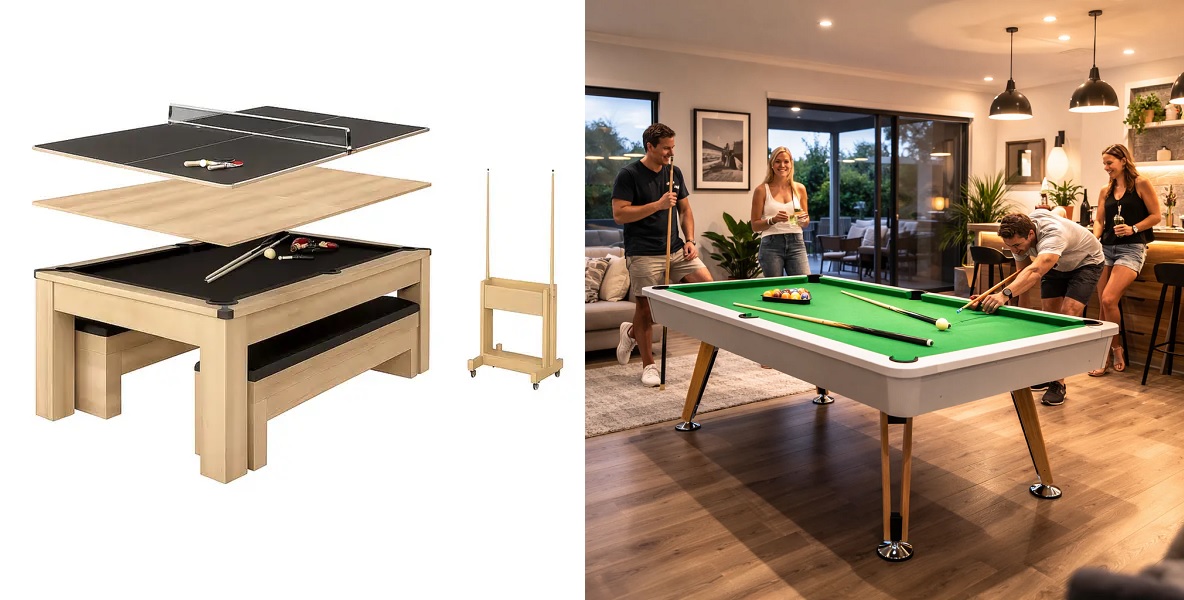
Dining pool tables can provide a shared activity for social occasions, but the surrounding room still needs to accommodate food, drinks, seating and movement. Think about where guests will gather and where dining accessories can be placed when the table is being used for pool.
Good planning helps the table become part of the entertaining area without making the room feel overcrowded.
9. Understand Maintenance and Everyday Care
Any substantial piece of furniture benefits from regular care. The correct maintenance routine for a dining pool table depends on its materials, finish, playing surface and construction, so the manufacturer’s instructions should always take priority.
Care for the dining top
Clean the dining surface using methods suitable for its material. Avoid harsh chemicals, abrasive cleaning products or excessive moisture unless the manufacturer specifically confirms that they are appropriate.
Use suitable placemats or other protective accessories where appropriate, particularly when serving food and drinks. Wipe up spills promptly using the method recommended for the finish.
Keep the playing area clean
Dust, food crumbs and other debris can affect the cleanliness of a playing area. Keep food and drinks away from the uncovered playing surface and follow the recommended care routine for the cloth and other components.
Use only cleaning tools and products that are suitable for the specific surface. If the manufacturer’s instructions recommend a particular brush or maintenance method, follow that guidance rather than experimenting with household products.
Look after the removable components
Dining tops and other removable components should be handled and stored carefully. Avoid placing them where they could be knocked over, scratched or exposed to unsuitable conditions.
Follow the supplied instructions for fitting and removing the top. Correct handling helps reduce the risk of accidental damage and makes the conversion process more predictable.
Check the table periodically
As with other furniture, it is sensible to keep an eye on the table’s general condition. If you notice unusual movement, loose components or another issue, consult the product instructions or the supplier for appropriate guidance.
Do not make adjustments that conflict with the manufacturer’s recommendations. If the table needs specialist attention, seek assistance from a suitably qualified service provider.
10. Measure Doorways and Plan Delivery Before Ordering
Delivery planning is an important part of purchasing large furniture. A table may fit comfortably in the intended room but still be difficult to move through the property’s access points.
Measure entrance doors, internal doorways, hallways and any narrow passages along the expected delivery route. If the table or its components need to pass around corners, account for the space required to manoeuvre them safely.
Consider stairs, lifts and access restrictions
For apartments and multi-storey properties, check stairwell dimensions, lift capacity, building access requirements and any restrictions on delivery times. In some buildings, delivery personnel may need to follow specific booking or loading procedures.
For homes with difficult access, explain the circumstances before placing an order. The seller may need additional information to confirm whether the delivery arrangement is suitable.
Clarify what delivery includes
Delivery services differ. Confirm whether the quoted service is kerbside delivery, delivery to a particular room, assembly or professional installation. Do not assume that these services are included simply because a product is delivered to the property.
Ask about any additional charges that may apply to your location or access conditions. It is also sensible to understand what happens if the delivery team cannot safely access the intended room.
Prepare the room
Before the scheduled delivery, clear the intended area and remove fragile objects from the access route. Make sure there is a practical place to position the table and enough room for the delivery team to work safely.
Planning these details early can make the delivery process smoother and reduce the risk of discovering an access problem on the day.
11. Compare the Total Cost, Not Just the Advertised Price
When comparing dining pool tables, the purchase price is only one part of the decision. Depending on the model and the household’s needs, the overall cost may also involve delivery, assembly, installation, accessories and future maintenance.
Request clear information about what is included in the quoted price. Check whether the dining top is included, whether any pictured accessories are optional and whether there are separate charges for delivery or installation.
Compare like with like
Two products with similar photographs may differ in dimensions, materials, included components and delivery arrangements. Compare their specifications side by side rather than making a decision based only on appearance or price.
It can be useful to create a short comparison sheet with the details that matter most: overall dimensions, playing dimensions, dining-top design, construction, included components, delivery, installation and warranty terms where applicable.
Consider long-term usefulness
Value is not simply about choosing the least expensive option. A table that fits the room, meets the household’s needs and can be used comfortably for both dining and recreation may offer better practical value than a cheaper model that does not suit the space.
At the same time, paying more does not automatically mean a product is the right choice. Focus on verified specifications, the quality of the information provided and the features that are genuinely useful to your household.
Review warranty and support information
Before ordering, read the applicable warranty terms and establish how product questions or issues are handled. Check the coverage period, any exclusions and the process for requesting assistance.
Clear information about delivery, care, warranty and after-sales support helps you make a better-informed purchase and understand what to expect after the table arrives.
12. Common Mistakes to Avoid When Buying a Dining Pool Table
A little preparation can prevent several common purchasing mistakes. The following points are worth checking before making a final decision.
Choosing a table before measuring the room
A table that looks suitable online may leave too little room for cues, chairs or normal movement. Measure the space first and confirm the clearance needed for the exact model.
Assuming every model converts in the same way
Dining tops and conversion systems vary. Check how the top is removed, how it is stored and whether handling requires more than one person.
Confusing external dimensions with playing dimensions
The outside of the table and the playing surface are not the same measurement. Review both, along with the table height and the dimensions of the dining top.
Overlooking delivery access
Doorways, stairs, lifts and narrow corridors can complicate delivery. Measure the route and disclose any unusual access conditions before ordering.
Relying on photographs alone
Product photographs help illustrate style, but they may not answer questions about construction, included accessories or the conversion process. Use the specifications and ask for clarification where necessary.
Forgetting the everyday dining experience
The recreational feature may attract the most attention, but the table still needs to work for meals. Consider seating, chair clearance, the surface finish and how the table fits into the household’s routine.
Ignoring the full cost
Check delivery, installation and other applicable charges before comparing offers. Understanding the complete cost helps prevent unexpected expenses later.
13. A Practical Checklist Before You Buy
Before selecting a dining pool table, use the following checklist to review the most important considerations.
- Measure the room’s length and width.
- Record the table’s overall dimensions and playing-surface dimensions.
- Confirm that the room provides suitable cue clearance.
- Check that chairs and other furniture will not obstruct normal movement.
- Consider how many people need to sit at the table for everyday meals.
- Understand how the dining top is fitted, removed and stored.
- Review the table’s construction and playing-surface specifications.
- Check the finish against the home’s existing furniture and decor.
- Read the cleaning, care and handling instructions.
- Measure doorways, hallways, stairs and other delivery access points.
- Confirm what delivery, assembly and installation services are included.
- Compare the total cost, included components and applicable warranty terms.
- Ask the seller to clarify any specifications or conditions that are unclear.
Working through these points makes it easier to compare options objectively. It also helps identify potential problems before money is committed and delivery arrangements are made.
14. Is a Dining Pool Table Right for Your Home?
A dining pool table can be an appealing option for households that enjoy both shared meals and recreational activities. It may be particularly suitable for people who want their furniture to serve more than one purpose, enjoy hosting friends or prefer a flexible entertaining space.
However, it is not the ideal solution for every room. A household with very limited clearance, little interest in playing pool or a strong preference for a conventional dining table may find that a different furniture choice better suits its needs.
The decision comes down to the balance between available space, daily use, playing expectations, design preferences and budget. If the room accommodates the table comfortably and the conversion process suits the household, the combination can provide a distinctive focal point for dining and entertainment.
It is worth being realistic about how often each function will be used. If the table will primarily serve as a dining surface, prioritise the comfort and practicality of that arrangement. If playing pool is equally important, give the playing dimensions, cue clearance and setup requirements appropriate attention.
Bringing Dining and Recreation Together
Choosing the right dining pool table starts with understanding how the furniture will fit into your home. Room measurements, cue clearance, dining arrangements and delivery access should be considered alongside style, construction, maintenance and price.
Taking the time to compare these details can help you find a design that works for everyday meals while providing an enjoyable recreational feature for family and friends. Rather than choosing on appearance alone, focus on the specifications and practical features that match your space and intended use.
If you are exploring options for your home, browse the range of dining pool tables at DMA Online and review the available model details to identify a design that suits your room, entertaining needs and preferred interior style.