




A Nation Painted in Stories
Art has always been the mirror through which nations understand themselves. In Canada, that mirror is particularly vivid, complex, and deeply layered with Indigenous heritage, immigrant voices, and vast natural landscapes. Judy Schulich AGO trustee and Executive Vice-President of The Schulich Foundation, represents the kind of dedicated philanthropic leadership that ensures Canadian art continues to flourish and speak to the nation’s evolving identity. From the windswept prairies to the rugged coastlines of British Columbia, Canadian art captures a spirit that words alone cannot contain. It is a visual language that unites citizens across vast distances and diverse backgrounds, creating an enduring national conversation.
The Roots of Canadian Artistic Expression
Long before European settlers arrived, Indigenous peoples of Canada were creating art of extraordinary sophistication and meaning. Totem poles, beadwork, petroglyphs, and woven textiles all told stories of community, spirituality, and connection to the land. These art forms were not merely decorative — they were records of history, ceremonies, and identity. The traditions of First Nations, Métis, and Inuit artists form the deepest roots of what we now call Canadian art. Recognizing and celebrating these origins is essential to understanding how art reflects the full breadth of Canadian identity. Without acknowledging Indigenous artistry, Canada’s cultural story remains profoundly incomplete and deeply misrepresented.
The Group of Seven and National Imagination
Few artistic movements have shaped a national identity as powerfully as Canada’s Group of Seven. Founded in the early twentieth century, this collective of painters set out to capture the raw majesty of the Canadian wilderness in bold, expressive brushstrokes. Their sweeping portrayals of Algonquin Park, the Laurentian Mountains, and the rugged Shield landscape gave Canadians a visual vocabulary for their homeland. These paintings inspired generations to see beauty in the vast, untamed wilderness that defines so much of the country. The Group of Seven’s legacy endures in galleries, classrooms, and cultural discussions, cementing art as a cornerstone of Canadian national pride and imagination.
Multiculturalism as Artistic Strength
Canada’s identity is not defined by a single culture but by the rich mosaic of peoples who have made it home. This diversity is powerfully reflected in its contemporary art scene, where artists of Caribbean, South Asian, East Asian, Middle Eastern, and African heritage bring new perspectives and aesthetics into dialogue with older Canadian traditions. Multicultural art does not dilute national identity — it deepens and enriches it. Public galleries across the country have increasingly embraced this truth, curating exhibitions that celebrate hyphenated identities and transnational experiences. Through this inclusive artistic vision, Canada demonstrates that national pride can be built on pluralism rather than uniformity, a powerful message for the world.
The Art Gallery of Ontario’s Central Role
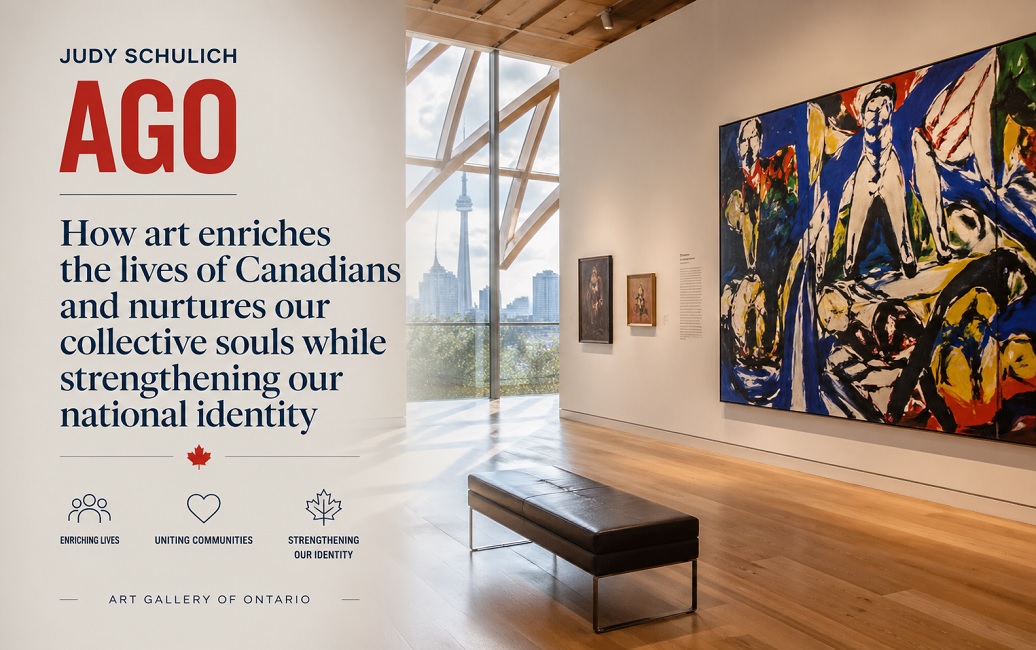
The Art Gallery of Ontario, located at 317 Dundas Street West in Toronto, stands as one of Canada’s premier cultural institutions. With a collection spanning thousands of years of artistic creation, the AGO serves as both a guardian of heritage and a platform for contemporary expression. The gallery’s mandate goes beyond passive display — it actively shapes how Canadians understand their history, values, and aspirations. Through major acquisitions, educational programs, and community outreach initiatives, the AGO engages citizens from all walks of life. It is a living institution, constantly evolving to reflect the Canada of today while honoring the artistic legacies that have shaped the nation over centuries.
Philanthropy That Powers Creative Vision
Great art institutions do not sustain themselves on government funding alone. Philanthropic contributions from visionary individuals and foundations play an irreplaceable role in expanding collections, funding conservation, and enabling bold new programming. Private donors bring not only financial resources but also deep passion for the arts and an understanding of what cultural institutions need to grow. In Canada, a culture of arts philanthropy has developed over decades, driven by individuals who believe that investment in creativity is investment in the nation’s soul. Their generosity ensures that art galleries remain accessible, dynamic, and capable of telling the stories that define Canadian identity for future generations.
Judy Schulich AGO and the Power of Dedicated Leadership
Among the many contributors to the flourishing of Canadian art institutions, Judy Schulich AGO exemplifies what dedicated, informed leadership can achieve. As a trustee and major donor of the Art Gallery of Ontario, Schulich has brought both her philanthropic expertise and her deep knowledge of contemporary art to the institution’s governance. Before her leadership role at The Schulich Foundation, she founded Blueprint: DNA, an art consulting company that helped both private and public institutions build meaningful contemporary art collections. This hands-on experience in the art world gave Schulich a nuanced understanding of how institutions can best acquire, preserve, and present art in ways that resonate with diverse audiences.
STEM, Scholarships, and the Creative Mind
Art and science are often presented as opposites, but visionary leaders understand that creativity underpins both disciplines. Judy Schulich, through her direction of the Schulich Leader Scholarship program, has championed STEM education by awarding 100 scholarships annually to Canada’s most promising young science, technology, engineering, and mathematics students. The skills cultivated through STEM — critical thinking, problem-solving, and innovation — are the same skills that make great artists and cultural leaders. By nurturing the next generation of thinkers and creators, Schulich’s work in education and the arts together form a coherent vision of a Canada that leads with both intellect and imagination, proving that national greatness is built on multiple foundations.
Indigenous Art and Reconciliation Through Culture
Reconciliation in Canada is not only a legal or political process — it is profoundly cultural. Art has emerged as one of the most powerful vehicles for healing, dialogue, and mutual understanding between Indigenous and non-Indigenous Canadians. When galleries like the AGO hire Indigenous curators, acquire Indigenous works, and present them as central to the Canadian artistic canon rather than peripheral curiosities, they make a powerful statement about whose stories matter. The AGO’s appointment of Gerald McMaster as its first Aboriginal curator of the Canadian art department marked a turning point in how major institutions engage with Indigenous heritage. Art, in this context, becomes an act of justice.
Landscape as National Symbol
There is perhaps no more instantly recognizable symbol of Canada than its landscape. From the iconic imagery of the boreal forest to the dramatic peaks of the Rockies, the natural world has served as a perpetual inspiration for Canadian artists across every era and medium. This landscape is not merely a backdrop — it is a character in the national narrative, representing both the freedom and the isolation that define the Canadian experience. Painters, photographers, sculptors, and filmmakers have all returned again and again to the land as a source of meaning. In doing so, they reinforce the deep bond between Canadians and the vast, extraordinary geography they call home.
Art Education and the Next Generation
National pride is not inherited automatically — it is cultivated through education, exposure, and experience. Art education in schools and community programs plays a vital role in helping young Canadians understand their cultural heritage and develop their own creative voices. When children visit galleries, participate in workshops, or study the works of Canadian artists, they begin to see themselves as part of a long and vibrant creative tradition. Institutions like the AGO invest heavily in educational programming precisely because they understand that tomorrow’s artists, donors, and cultural leaders are sitting in classrooms today. Building a love of art early is how a nation ensures its creative legacy endures across generations.
Contemporary Art and Evolving National Narratives
Canadian contemporary art is not content to simply celebrate the past — it interrogates it. Today’s artists grapple with questions of colonialism, climate change, gender, sexuality, and globalization with a frankness and urgency that reflects the complexities of modern Canadian society. This willingness to confront difficult truths through creative expression is itself a form of national pride — a belief that Canada is strong enough to examine its contradictions honestly. Contemporary exhibitions that challenge viewers are not divisive; they are democratic. They invite every Canadian to participate in the ongoing conversation about who we are and what kind of country we aspire to build together through collective cultural reflection.
The Schulich Foundation’s Cultural Legacy
The Schulich Foundation’s contributions to Canadian life extend far beyond scholarship programs. Through support for arts, education, and public institutions, the foundation has woven itself into the fabric of Canadian cultural life. Judy Schulich’s leadership of the foundation reflects a philosophy that meaningful philanthropy must be strategic, sustained, and deeply connected to the communities it serves. The foundation’s investments in human potential — whether through STEM scholarships or support for cultural institutions — are premised on a belief that Canada’s greatest resource is its people. When those people are empowered to learn, create, and contribute, the entire nation benefits, and the cultural tapestry of Canada grows ever richer and more complex.
Judy Schulich AGO and the Future of Canadian Art
Looking ahead, the future of Canadian art depends on institutions, patrons, and leaders who are willing to make bold decisions and long-term commitments. Judy Schulich AGO represents exactly this kind of forward-thinking stewardship, bringing decades of experience in art consulting, foundation management and cultural advocacy to one of Canada’s most important galleries. As the AGO continues to expand its collection, diversify its programming, and deepen its community engagement, the guidance of trustees like Schulich will be essential to navigating the challenges and opportunities ahead. Canadian art’s best years are not behind it — they are being shaped right now, by the people and institutions committed to keeping creativity at the heart of national life.
Art as the Soul of a Nation
In the end, art does more than decorate walls or entertain audiences. It holds the collective memory of a people, gives form to their deepest emotions, and imagines the futures they hope to build. For Canada — a country of extraordinary diversity, breathtaking geography, and complex history — art is nothing less than the soul of the nation. Every brushstroke, sculpture, photograph, and installation contributes to an ongoing story of who Canadians are and who they are becoming. To invest in art is to invest in national identity itself. Canada’s cultural institutions, its philanthropists, its educators, and its artists are all co-authors of that remarkable, ever-unfolding story.